Ohiro Karasu Whetstone 6" x 1"
SKU: OHIRAKARASUX
DISPONIBILITÉ: En stock (3 articles)
Free Shipping
on orders over $50
Returns in 14 Days
following delivery date
Military Discounts
active, retired, veterans
Ohira Karasu whetstones are used for finishing knives on sharpening systems such as Hapstone, TSPROF, and other systems compatible with the Edge Pro form factor. The stones are custom-cut from bench stones sourced from a reliable Japanese seller, then lapped, mounted on high-quality aluminum blanks, and laser-engraved. All operations are performed in-house at Gritomatic.
Name breakdown:
- 大平 (Ohira) — a western Kyoto mine (Nishi Mono) located near Mt. Atago. One of the few mines still occasionally active. Full designation: 大平山合砥石 (Ohira-kōzan gō-toishi = Ohira mine finishing/polishing stone).
- 烏 (Karasu) — visual/color attribute meaning "crow": a dark blue-black-and-white pattern within the stone resembling crows in flight against a darkening sky. Karasu indicates origin from the Aisa layer (合さ) of the Hon-Kuchi Naori strata. Karasu stones almost exclusively come from the Aisa layer, which sits at the boundary between Tomae and Namito. The Aisa layer has only four seams and is known for high hardness and abrasive force, but also for a higher probability of impurities.
Mining region: Ohira mine (大平山), western Kyoto (Nishi Mono), near Mt. Atago. One of the few Kyoto whetstone mines that is still occasionally active (along with Maruoyama). Stock is also available from material stored by major wholesalers (Tanaka, Imanishi, Hatanaka, Asano). The Hon-Kuchi Naori seam at Ohira connects westward to Yaginoshima and eastward toward Atagoyama, Ozuku, Okudo, and Nakayama.
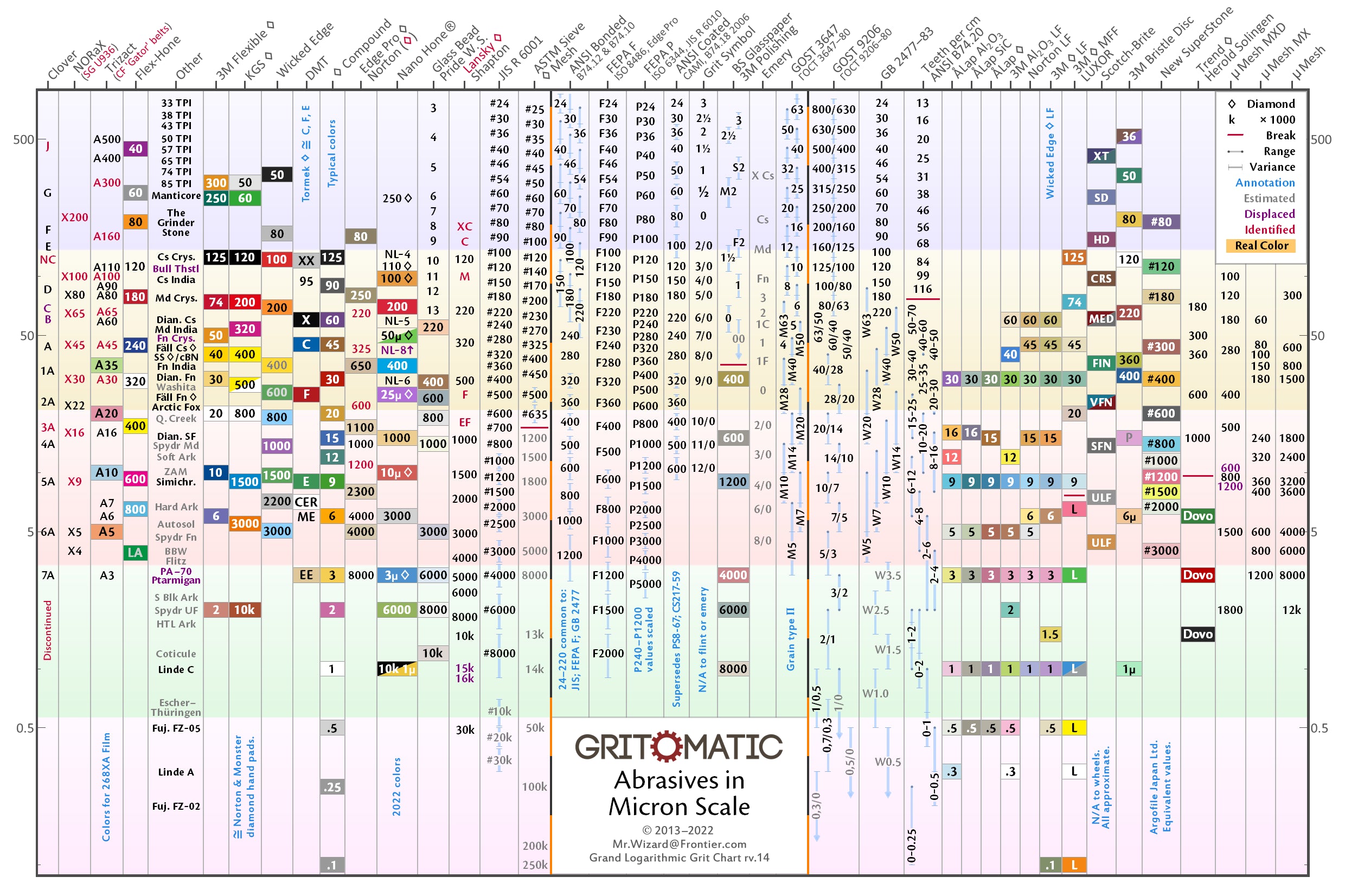
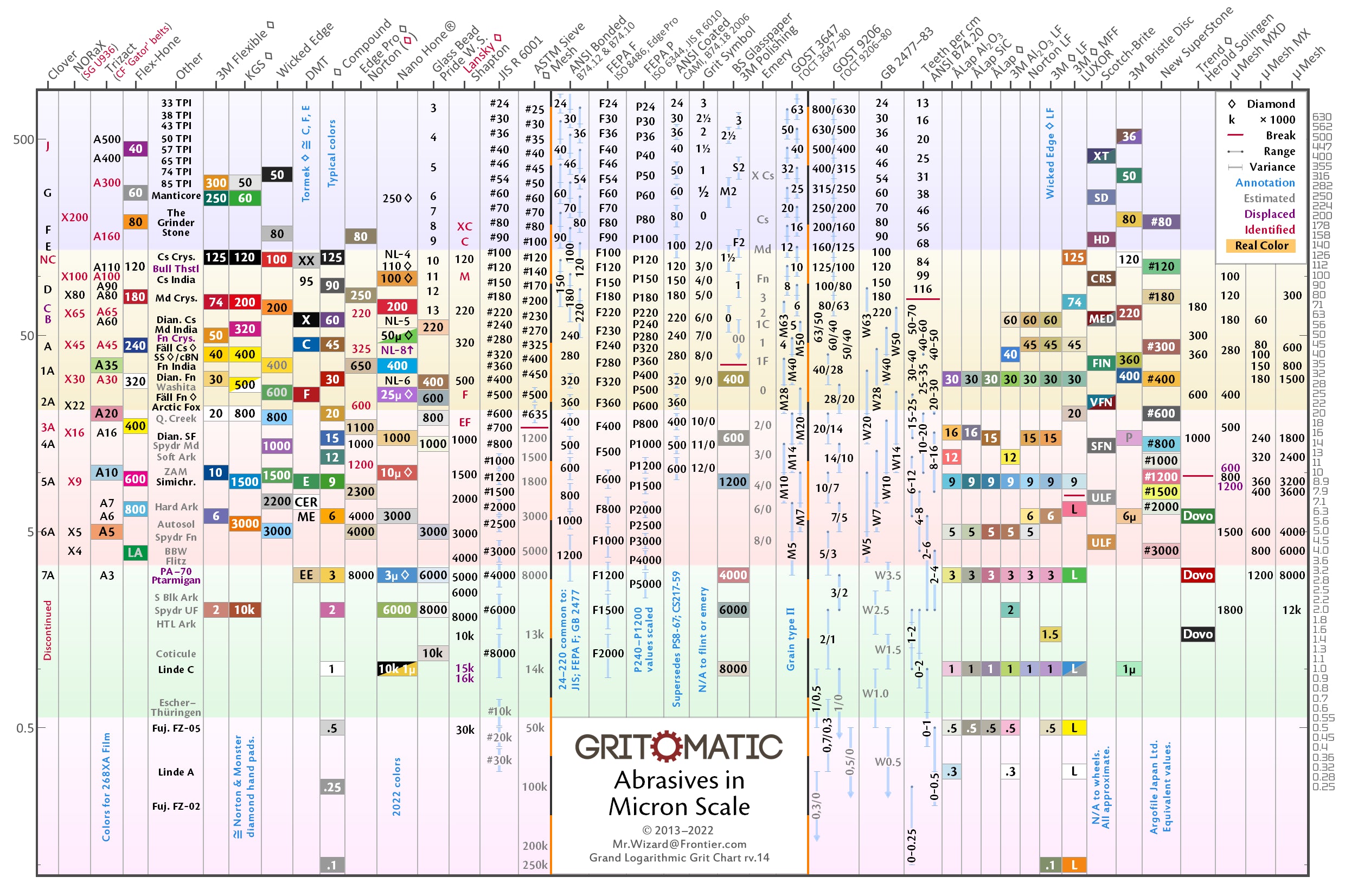
Grit rating (JIS equivalent): Ohira stones in general are described as approximately 9,000–10,000 JIS. Karasu/Aisa origin implies harder, denser material which tends toward the upper end of the fineness range.
LV Hardness: LV 4–5 (hard to very hard). Ohira Karasu is documented as "comparatively hard" and requires nagura. The Aisa layer from which Karasu originates is known for hardness. Individual specimens on the market have been noted at hardness 3.5–5 depending on the specific seam, but Karasu from Aisa is typically on the harder end. Not recommended for beginners.
Recommended progression: After a synthetic 6,000–8,000 JIS stone. Intended for final finishing of high-quality knives. Nagura is required.
Composition: Siliceous shale, Aisa layer (合さ) of the Hon-Kuchi Naori geological formation. The Aisa layer sits below Tomae and above Namito, with only four seams. Karasu patterning (dark blue-black areas) is caused by carbonaceous or organic material concentrated during sediment compression. Aisa stones are noted for high abrasive force but also for a higher incidence of impurities compared to Tomae or Namito. The Ohira mine specifically produces a rare variant with Karasu layers distributed from the surface through to the bottom of the stone.
Steels to sharpen: Well suited for hammered blades and high-carbon Japanese steels and traditionally forged blades.
Usage recommendations:
- No soaking required — surface wetting only
- Nagura is required — the stone is hard and does not raise slurry easily on its own; use Mikawa Shiro Nagura (Botan or Mejiro) to develop working slurry
- Not recommended for beginners; requires experience and controlled pressure
- Maintain slurry on the surface throughout sharpening; do not allow the stone to run dry
![Strop en cuir kangourou sur un blanc anodisé [6 "x 1"]](http://fr.gritomatic.com/cdn/shop/files/multi-color-kangaroo-leather-strop-for-edge-pro_600x@3x.progressive.jpg?v=1767522952)
SKU: TIAN-ROO-25-BLACK
DISPONIBILITÉ: En stock (4 articles)
TYPE DE PRODUIT: 6" Mounted Strop
MARQUE: Gritomatic
Kangaroo Leather Strop is an efficient way of final polishing a cutting edge using guided knife sharpeners. A leather strop enhances the cutting edge by correcting small nicks and smoothing grooves.The stropping medium is leather pad made of vegetable tanned...

SKU: GCK-PLANESHIFT-PPA-PRIME
DISPONIBILITÉ: En stock (5 articles)
TYPE DE PRODUIT: Sharpener Accessories
MARQUE: Gritomatic
Hapstone PlaneShift Series includes components of Hapstone RS adopted for other sharpening systems.Single-clamp knife sharpeners have consistently been less adaptable than multi-clamp systems when sharpening various blades, for instance, fillet knives. The Planeshift Clamps Upgrade is a dual-clamp solution for...

SKU: HEXSCREWDRIVER-3MM
DISPONIBILITÉ: En stock (98 articles)
TYPE DE PRODUIT: Accessories and Tools
MARQUE: Gritomatic
Many guided knife sharpeners include L-shaped Allen keys, the least expensive tool to handle hex screws. Hex screwdrivers are much easier to use than Allen keys. If you use your sharpener on a regular basis, hex screwdrivers will make your...
![Strop en cuir de la cuve de vache [6 "x 1"]](http://fr.gritomatic.com/cdn/shop/files/Fine_20Cowhide_20Leather_20Strop_206-inch_20_28thin_20blank_29_600x@3x.progressive.jpg?v=1762871472)
SKU: LEATHER-25
DISPONIBILITÉ: En stock (62 articles)
TYPE DE PRODUIT: 6" Mounted Strop
MARQUE: Gritomatic
Fine Leather Strop is an efficient way of final polishing a cutting edge using guided knife sharpeners. A leather strop enhances the cutting edge by correcting small nicks and smoothing grooves.The stropping medium is thin fine cowhide leather mounted on...

SKU: ROLL-BAG-6
DISPONIBILITÉ: En stock (977 articles)
TYPE DE PRODUIT: Accessories and Tools
MARQUE: Gritomatic
Roll Bag can hold up to 6 sharpening stones of Edge Pro format.